Wednesday, 29 July 2015

International Tiger Day!

Hi PetPals!

Did you know today is International Tiger Day?


International Tiger Day is an annual event and is both an awareness day as a celebration. It was founded at the Saint Petersburg Tiger Summit in 2010. This was done because at that moment wild tigers were too close to extinction. Many animal welfare organisations pledged to help these wonderful creatures and are still helping to raise funds to reach this goal. The goal of Tiger Day is to promote the protection and expansion of the wild tigers habitats and to gain support through awareness for tiger conservation.


We have lost 97% of our Wild Tigers in just 100 years!  Instead of 100,000, as few as 3000 live in the wild today, last year it was 3200! The figures show that in just 1 year, we have lost 200 Wild Tigers. It's horrifying to think that if we carry on at that rate, we will loose these beautiful creatures in just 1 year! 

It's so important that we make an effort to conserve these animals. We must change our attitude towards animals and understand that they have a right to live too. Our actions and behaviour has an impact on them.


It's not about donations but raising awareness. If we all share a picture or a post about International Tiger Day then we can make a difference. By sharing a post, you could be informing and educating someone who perhaps didn't realise just how critically endangered these animals are.

For more information, please Click here.

Don't forget to follow us on Bloglovin to stay up to date!

Tuesday, 28 July 2015

Swimming Guineapigs- Cute or Cruel?

Hi PetPals!

Over the weekend, a video of two Guineapigs swimming in a swimming pool went viral over social media.

The video (Click here) shows an owner placing his Guineapigs into a very big and deep swimming pool and letting them swim. Whilst the majority of people who have shared this video think it's ''cute'', in reality and when you think of Animal Welfare, it's not.

Guineapigs are not designed to swim. They are land animals and in the wild would live in groups on grassy plains. They would never choose to go swimming and often avoid rivers and lakes. They are not adapted for the water and nor do they have the strength to swim.

Guineapigs hold most of their weight in the bottom half of their body which means if you place them in water, they will just sink. The only reason they start ''swimming'' is because they have no choice. It's either sink or swim, death or life.

Placing your Guineapig in unnatural surroundings such as water will also cause them considerable stress. Their heart and lungs are small and located just under their front legs. Making them swim is putting major pressure on their breathing system.

Another thing that is significantly bad about making your guinea-pigs swim is the temperature of the water. What might feel warm to you will actually be freezing for your Guineapig. Again, it's not good to mess with your Guineapigs temperature as this can cause all kinds of illnesses.

I know a lot of you will be shouting at the screen ''What about baths?''. Well, Guineapigs should only be bathed when necessary AND the water should be very shallow and warm enough for your Guineapig.


The video make look ''cute'' but in actual fact, both Guineapigs are very stressed out. One is circling and the other is desperately looking for a way out but the sides are far too high for him to climb. In short, the water is way too deep, the sides are far too high and the Guineapigs are extremely stressed by it all.

And so is it Cute or Cruel? the verdict is...... Cruel.

Guineapigs are not designed to swim and should never be put in a situation where they are forced to. If you see this video on any social media, please do not share. Instead, share this post. The worst thing about the video going viral is the amount of owners who will try make their Guineapigs swim. Lets try and prevent that.

Sunday, 26 July 2015

Meet the Penguins

Hi PetPals!

With August just around the corner, it's time for yet another cute animal series to start on ITV. This year, ITV have brought us 'Meet the Penguins'.

The documentary follows the Penguins at London Zoo and their keeper, Adrian. Adrian who has worked with the Penguins at London Zoo for over a decade takes a once in a lifetime trip to Peru to see where his beloved Humboldt Penguins originated from.

Adrian with penguin chicks in Peru


The series is sure to be a fantastic and heart warming.

It starts tonight on ITV1 at 7pm! You'll be silly to miss it

Saturday, 25 July 2015

Review || Natures Aid Coconut Oil - Guinea pig Grease Gland

Hi PetPals!

Some of you may know this but male guineapigs (boars) have grease glands near their bottoms that need cleaning frequently. 

For those that don't know what I am on about, here is a picture that will help:


The grease gland in a guinea pig is located just above where a tail would be (if cavies had a tail). Some sows and some boars have active grease glands that can be a challenge to clean. 

You will know if your guineapig has an active grease gland as it will be quite smelly, greasy and look black. 

Owning 3 boars myself, I know how hard it is to keep this area clean. I have tried everything from using washing up liquid to pet shampoo much to my avail. 

Recently, I stumbled across a website that told me to use pure coconut oil. Now I know what you're thinking, 'the grease glands are oily so why use oil to treat it'. Well much to my surprise, it works!

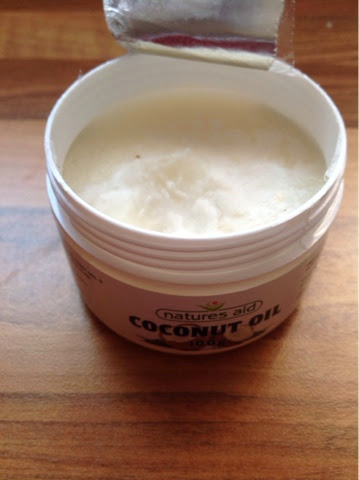
I purchased this 'Natures aid Coconut Oil' from Amazon for £3.45 which is a bargain! The tub is 100ml which is more than enough. It arrived very quickly and I have been very impressed by it.


It's not a pure oil as it's name might suggest but more a waxy kind of cream that turns quite wet when you get a little bit on your fingers.


To apply it, I sit my guineapig on a towel and stick my fingers into the pot and get quite a generous layer out. I then literally rub it all over my guineapigs grease gland. As I do this, I can feel the wax becoming loose and wet which is obviously the coconut oil itself. Now you have two options, you can either leave the coconut oil on your guineapig or wipe it off 10-15 minutes later. I've tried both and they work both the same.

Since using this, my guineapigs grease glands have improved and I find myself not having to do this as often as what I was. My guineapigs are also not getting stressed out having baths and their grease glands scrubbed. It's definitely a lot more gentle and calming for your guineapig. 

I really would recommend this to all guineapig owners. Not only does it do a good job of cleaning out the grease glands but coconut oil also has anti-fungal properties too. 

You can purchase this particular pot here: 


Wednesday, 15 July 2015

Guinea-Pigs Bedding and Enrichment

Hi PetPals!

Guinea-pigs are not as tough as what they were 10-15 years ago. There are a number of reasons why this is and these include breeding, genetics and owner knowledge.

Some breeders are not choosing wisely which guineapigs they mate. To get the 'perfect' guineapig, both the male and female need to be healthy and have good genetics so that their offspring will be as healthy too. Breeding a guineapig that has health problems is only passing on those genes to the offspring which means they too will get sick. Now of course, every animal will become ill at some point in their life but what you don't want is an animal that's constantly sick. This is not good for the animal or you as it's distressing on both parts. 

Owner knowledge is also something that could be a reason for them not being as hardy as they used to be. Not everyone knows their needs and signs/symptoms of illness etc. This is purely why I decided to set up this blog.

Anyway..

Bedding

The best bedding for guinea-pigs is a layer of newspaper with LOTS of HAY. 


You should never give a guinea-pig straw as it does not provide them any nutritional value. It can also irritate your guinea-pig too. Hay like vitamin C is essential in keeping guineapigs healthy.

Another thing you should never give guinea-pigs is sawdust. A lot of owners use sawdust to soak up the urine and the smell (especially if the guineapigs are kept indoors). Whilst, it does a good job at soaking up the urine and masking the smell, it's SUPER BAD for your guineapig. Sawdust gets stuck in their ears, eyes and paws which can cause infections and illnesses. It's also not very nice to lay on, just imagine sleeping on a bed of sawdust - sharp, smelly and rough. Vets do not recommend sawdust and blame most eye and ear infections on sawdust. 

If you want something to soak up the urine and the smell, I recommend you use carefresh. It's a little expensive but the benefits for both you and your guinea-pig are far greater than sawdust. You can get it at pets@home, amazon, ebay and most pet shops. 


Carefresh is soft and enables guineapigs  to make little nests and feel safe and comfortable. It soaks up urine and you wouldn't even notice the smell. For more info on carefresh, check out their website: http://www.carefresh.com/products/happy-habitat-system

Of course, if you use carefresh, make sure you add hay on top too. 

Enrichment

For those that don't know, enrichment means to make your animals life fuller and happier. Guineapigs are very sociable animals and so you should always keep them in pairs or small groups (preferably the same sex). 

Guineapigs love exploring and 'tunnelling' - it's something they would do in the wild. Add tunnels to your guineapigs enclosure, even stuff the tunnels with hay, they will love exploring them. 


Guineapigs need things to chew to keep their teeth trim and in good health. Lots of pet shops have toys your guineapig can chew but most guineapigs are happy with one of these:


Yep, toilet roll tubes are guineapigs favourite toys. They love to pick them up, chew them and are lots more fun when you hide fruit in. They're also extremely cheap for you too, everyone has toilet roll so there's no reason why you can't give your guineapig the toilet roll tube when it's empty.

Recently, I noticed my guineapigs love the sound of bells and chimes. So, off I went to Asda for some kitten bell balls. They were super cheap and strong enough that I knew they wouldn't break and cause a choking hazard. As soon as I put them in their cage, they were intrigued and were soon picking the me up by their teeth and shaking them. Guineapigs LOVE them and they're super cute to watch them playing with them. 

It's extremely important you provide your guineapig with something to do. How would you feel being stuck in an empty room ALL DAY EVERY DAY. Make sure you let them out of their cage too, guineapigs need exericise every day. Just because the weather is bad outside does not mean you cannot bring them inside and let them on the floor (Make sure you get rid of wires, block holes, no dogs/cats around and it's safe to let them out). 


Perhaps even buy your guineapig a play run so that you can feel reassured your guineapigs are safe during floor time in your house.


Well, I hope this has helped some of you. Please check out the following links for places to buy enrichment, bedding and for more information


Tuesday, 21 April 2015

Buying a Puppy

Hi PetPals!

Hope you've had a wonderful Easter and Bank Holiday Weekend. Today's post is all about buying a puppy :)

When buying a puppy it's important to think about it long term. Puppies are a huge commitment and require a lot of time, love and care. Just like any other animal, puppies come with a financial commitment too. Potential owners need to make sure they can afford the vet bills, food, toys and grooming costs as otherwise owners may have to rehome their dog which can be stressful on both parts.


These are a few things that every potential owner should do/consider

1. Research your breed thoroughly - whatever breed you choose, make sure you do your homework first. Talk to owners of the breed, go to the library, research on the internet. Whatever source you choose, make sure you know what the breed is like, how it behaves?, how much food it eats? How much exercise does it need?,  Can it be trained easily?, do they suffer with any health problems?. It's extremely important to know what dog your buying before you bring it home.

2. Your lifestyle - it's important to look at your lifestyle also. Do you work long hours?, Do you have time to care for your pet?, Are you fit and healthy enough to walk the dog? Can you afford to care for the dog? Do you live in the right area/house?

3. Research your breeder - it's okay to check out your breeder before buying, ask to see certificates and check them out on the assured breeder scheme (http://www.thekennelclub.org.uk/breeding/assured-breeder-scheme/). Also ask them questions like when can I take my puppy home? If they say at 7 weeks, do not buy from them and report them to the police. Good Breeders will sell their puppies at 12 weeks. Always ask to see receipts for vaccinations and worming products, even ask for their vet details so you can check the puppy has had their vaccinations.

4. Prepare early - So you have decided to get a puppy and have put your deposit down. Now it's time to prepare for the arrival. Get your house puppy proof and purchase all the necesseties. Always follow the breeders guidelines when it come to feeding as for so many weeks they will need a particular diet. 

5. Viewing your puppy - when viewing your puppy make sure the mother dog is present too. If the breeder makes up any excuses, do not buy from them and report to the police. Good breeders will allow you to see the mother and sometimes the father depending on if the studs owner has agreed to it. Also check the mother, does she look healthy? Is she friendly? Is she young herself? (Bitches should not be bred until they are at least 18 months old and should not be bred more than 6 times in her lifetime) Does the mum look like she's had more than one litter this year?. Don't be afraid to question the breeder, it shows you are a serious and dedicated dog owner. If the puppy is still suckling then they are too young to be sold. Make sure the puppies look healthy, have clear eyes and nose, clean bums and are alert to their surroundings. Check the dogs environment, is it clean? Is it safe? Are they being provided with food, water, toys? 

And there you have it, 5 key points to buying a puppy. 

If you ever have any doubt about a puppy or a breeder, do NOT buy. It's tempting to purchase a puppy just to save them but the best thing you can do is to report the breeders to the police and RSPCA. If you need to, revisit the puppies and take pictures/videos. The more evidence the police/RSPCA have, the better chance they have at taking the breeders to court and getting them convicted. 

If you are looking to buy a puppy, please remember all the dogs in rehoming centres who are looking for a second chance.


Sunday, 24 August 2014

Don't miss the last episode of The Zoo

Hi PetPals!

Quick reminder that The Zoo is on tonight at 8pm on ITV. It's the last episode in the series :(

In tonight's episode we find out if the Rhinos from Whipsnade Zoo make up and start a family.


Mak sure you don't miss it!