Hi PetPals!
Over the weekend, a video of two Guineapigs swimming in a swimming pool went viral over social media.
The video (Click here) shows an owner placing his Guineapigs into a very big and deep swimming pool and letting them swim. Whilst the majority of people who have shared this video think it's ''cute'', in reality and when you think of Animal Welfare, it's not.
Guineapigs are not designed to swim. They are land animals and in the wild would live in groups on grassy plains. They would never choose to go swimming and often avoid rivers and lakes. They are not adapted for the water and nor do they have the strength to swim.
Guineapigs hold most of their weight in the bottom half of their body which means if you place them in water, they will just sink. The only reason they start ''swimming'' is because they have no choice. It's either sink or swim, death or life.
Placing your Guineapig in unnatural surroundings such as water will also cause them considerable stress. Their heart and lungs are small and located just under their front legs. Making them swim is putting major pressure on their breathing system.
Another thing that is significantly bad about making your guinea-pigs swim is the temperature of the water. What might feel warm to you will actually be freezing for your Guineapig. Again, it's not good to mess with your Guineapigs temperature as this can cause all kinds of illnesses.
I know a lot of you will be shouting at the screen ''What about baths?''. Well, Guineapigs should only be bathed when necessary AND the water should be very shallow and warm enough for your Guineapig.
The video make look ''cute'' but in actual fact, both Guineapigs are very stressed out. One is circling and the other is desperately looking for a way out but the sides are far too high for him to climb. In short, the water is way too deep, the sides are far too high and the Guineapigs are extremely stressed by it all.
And so is it Cute or Cruel? the verdict is...... Cruel.
Guineapigs are not designed to swim and should never be put in a situation where they are forced to. If you see this video on any social media, please do not share. Instead, share this post. The worst thing about the video going viral is the amount of owners who will try make their Guineapigs swim. Lets try and prevent that.
Happy Pet Pals was set up to give advice and tips to pet owners and potential pet owners to ensure their pet pals are Happy Pets. Be sure to follow to stay up to date
Showing posts with label guineapig. Show all posts
Tuesday, 28 July 2015
Saturday, 25 July 2015
Review || Natures Aid Coconut Oil - Guinea pig Grease Gland
Hi PetPals!
Some of you may know this but male guineapigs (boars) have grease glands near their bottoms that need cleaning frequently.
For those that don't know what I am on about, here is a picture that will help:
The grease gland in a guinea pig is located just above where a tail would be (if cavies had a tail). Some sows and some boars have active grease glands that can be a challenge to clean.
You will know if your guineapig has an active grease gland as it will be quite smelly, greasy and look black.
Owning 3 boars myself, I know how hard it is to keep this area clean. I have tried everything from using washing up liquid to pet shampoo much to my avail.
Recently, I stumbled across a website that told me to use pure coconut oil. Now I know what you're thinking, 'the grease glands are oily so why use oil to treat it'. Well much to my surprise, it works!
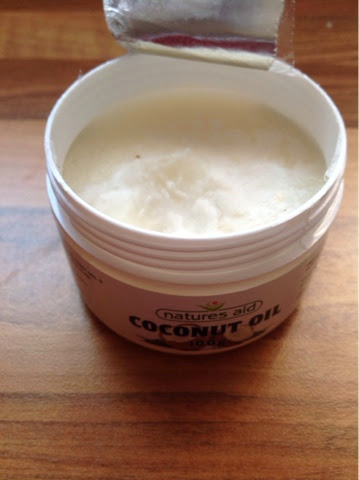
I purchased this 'Natures aid Coconut Oil' from Amazon for £3.45 which is a bargain! The tub is 100ml which is more than enough. It arrived very quickly and I have been very impressed by it.
It's not a pure oil as it's name might suggest but more a waxy kind of cream that turns quite wet when you get a little bit on your fingers.
To apply it, I sit my guineapig on a towel and stick my fingers into the pot and get quite a generous layer out. I then literally rub it all over my guineapigs grease gland. As I do this, I can feel the wax becoming loose and wet which is obviously the coconut oil itself. Now you have two options, you can either leave the coconut oil on your guineapig or wipe it off 10-15 minutes later. I've tried both and they work both the same.
Since using this, my guineapigs grease glands have improved and I find myself not having to do this as often as what I was. My guineapigs are also not getting stressed out having baths and their grease glands scrubbed. It's definitely a lot more gentle and calming for your guineapig.
I really would recommend this to all guineapig owners. Not only does it do a good job of cleaning out the grease glands but coconut oil also has anti-fungal properties too.
You can purchase this particular pot here:
Wednesday, 15 July 2015
Guinea-Pigs Bedding and Enrichment
Hi PetPals!
Guinea-pigs are not as tough as what they were 10-15 years ago. There are a number of reasons why this is and these include breeding, genetics and owner knowledge.
Some breeders are not choosing wisely which guineapigs they mate. To get the 'perfect' guineapig, both the male and female need to be healthy and have good genetics so that their offspring will be as healthy too. Breeding a guineapig that has health problems is only passing on those genes to the offspring which means they too will get sick. Now of course, every animal will become ill at some point in their life but what you don't want is an animal that's constantly sick. This is not good for the animal or you as it's distressing on both parts.
Owner knowledge is also something that could be a reason for them not being as hardy as they used to be. Not everyone knows their needs and signs/symptoms of illness etc. This is purely why I decided to set up this blog.
Anyway..
Bedding
The best bedding for guinea-pigs is a layer of newspaper with LOTS of HAY.
You should never give a guinea-pig straw as it does not provide them any nutritional value. It can also irritate your guinea-pig too. Hay like vitamin C is essential in keeping guineapigs healthy.
Another thing you should never give guinea-pigs is sawdust. A lot of owners use sawdust to soak up the urine and the smell (especially if the guineapigs are kept indoors). Whilst, it does a good job at soaking up the urine and masking the smell, it's SUPER BAD for your guineapig. Sawdust gets stuck in their ears, eyes and paws which can cause infections and illnesses. It's also not very nice to lay on, just imagine sleeping on a bed of sawdust - sharp, smelly and rough. Vets do not recommend sawdust and blame most eye and ear infections on sawdust.
If you want something to soak up the urine and the smell, I recommend you use carefresh. It's a little expensive but the benefits for both you and your guinea-pig are far greater than sawdust. You can get it at pets@home, amazon, ebay and most pet shops.
Carefresh is soft and enables guineapigs to make little nests and feel safe and comfortable. It soaks up urine and you wouldn't even notice the smell. For more info on carefresh, check out their website: http://www.carefresh.com/products/happy-habitat-system
Of course, if you use carefresh, make sure you add hay on top too.
Enrichment
For those that don't know, enrichment means to make your animals life fuller and happier. Guineapigs are very sociable animals and so you should always keep them in pairs or small groups (preferably the same sex).
Guineapigs love exploring and 'tunnelling' - it's something they would do in the wild. Add tunnels to your guineapigs enclosure, even stuff the tunnels with hay, they will love exploring them.
Guineapigs need things to chew to keep their teeth trim and in good health. Lots of pet shops have toys your guineapig can chew but most guineapigs are happy with one of these:
Yep, toilet roll tubes are guineapigs favourite toys. They love to pick them up, chew them and are lots more fun when you hide fruit in. They're also extremely cheap for you too, everyone has toilet roll so there's no reason why you can't give your guineapig the toilet roll tube when it's empty.
Recently, I noticed my guineapigs love the sound of bells and chimes. So, off I went to Asda for some kitten bell balls. They were super cheap and strong enough that I knew they wouldn't break and cause a choking hazard. As soon as I put them in their cage, they were intrigued and were soon picking the me up by their teeth and shaking them. Guineapigs LOVE them and they're super cute to watch them playing with them.
It's extremely important you provide your guineapig with something to do. How would you feel being stuck in an empty room ALL DAY EVERY DAY. Make sure you let them out of their cage too, guineapigs need exericise every day. Just because the weather is bad outside does not mean you cannot bring them inside and let them on the floor (Make sure you get rid of wires, block holes, no dogs/cats around and it's safe to let them out).
Perhaps even buy your guineapig a play run so that you can feel reassured your guineapigs are safe during floor time in your house.
Well, I hope this has helped some of you. Please check out the following links for places to buy enrichment, bedding and for more information
Tuesday, 17 September 2013
Small Animals see in Slow Motion
Hi PetPals!
Did you know that small animals see in slow motion? Well, today research from a study was published showing that the smaller and older an animal is, the slower they see things.
This means that they can observe movement on a finer timescale than bigger creatures, allowing them to escape from larger predators. Insects and small birds, for example, can see more information in one second than a larger animal such as an elephant.
The current study focused on vertebrates, but the team also found that several fly species have eyes that react to stimulus more than four times quicker than the human eye.
When you relate this to the common pets we all own, it means that pets like guineapigs, hamsters, gerbils, rabbits, rats and degus see in slow motion compared to other pets like dogs and horses.
Some of the animals with the fastest visual rate include:
- Starlings
- Pigeons
- Squirrels
Some of the animals with slowest visual rate include:
- Leatherback turtle
- European Eel
If you would like to find out more then please visit: http://www.sciencedirect.com/science/article/pii/S0003347213003060
Saturday, 7 September 2013
Guineapigs- Accomodation
Hi PetPals!
Guinea-pigs are really cute pets and are fascinating to watch. But what's the best house for them to live in?
Guinea-pigs MUST live indoors, they don't cope well outside especially when it's cold. Of course, I understand not everyone has room for a cage/hutch in their houses but it's really important that you are willing to adapt your house for them especially in autumn and winter months.
Guinea-pigs need a lot of room in order to be able to exercise, feel safe and comfortable. This is also one of the 5 freedoms (see previous posts). They can be housed in either a hutch or cage, I personally think cages are better especially if your guinea-pig is going to be housed indoors as it allows you to see them and for them to see you thus a stronger relationship between you both.
I love the Ferplast brand of cages, they're perfect for guinea-pigs. They're easy to build, clean out, are big enough for your guinea-pig and most importantly safe too.
Guinea-pigs MUST live in pairs or small groups. The Ferplast Rabbit 100 cage is the perfect size for 2 guinea-pigs.
You DO NOT want a cage any smaller than this as it's not enough room for your guinea-pig. If you have more than 2 guinea-pigs, I recommend you go up a size, for example the Ferplast 120 cage.
Hutches are suitable if your guinea-pig is going to be housed outside. Again, the hutch must be big enough for your guinea-pig. The best thing as a pet owner you can do is to actually go to the shop, look at the hutches themselves to get an idea of how big they actually are. Buying online may be easier but you don't really get to see how big the hutches actually are. By all means, look in shops, take notes on the sizes and then find that hutch online but make sure you know exactly how big the hutch is going to be before buying. You want your guinea-pig to be comfy, safe and happy.
If you decide that your guinea-pig is going to be housed outside, be prepared to bring your guinea-pig inside during the autumn and winter months (You may want to invest in a cage also). Guinea-pigs that live outside should come inside in October and not go back outside in their hutch until about April/May time. Of course, check the weather before you do this.
Guinea-pigs are extremely sensitive to temperature changes. You may think its freezing outside but to a guinea-pig it's like arctic conditions- super ice cold! So, bare in mind that when your cold, your guinea-pig outside is going to be extra cold.
The positioning of your guinea-pigs house is important to. Make sure cages are away from drafts, radiators and noisy areas. Hutches need to be away from direct sunlight, windy areas and not at the bottom of gardens. Place the hutch nearer to your back door so you can see them.
If you can't bring your guinea-pigs hutch indoors during winter, it's a good idea to put the hutch in a shed or garage and give them extra bedding. You can also use blankets to cover the hutch for extra insulation.
I personally think that if you cannot house a guinea-pig indoors then you may want to rethink about getting a guinea-pig. They are very sensitive to changes and can fall ill quickly.
For more information, please check out the following links or leave a comment below:
Monday, 26 August 2013
The Five Freedoms
Hi PetPals!
Today's post is about the 5 freedoms, for those of you that don't know what the 5 freedoms are, they are a list of requirements that pet owners must provide for their pets.
The 5 freedoms simply are:
1. Freedom from hunger and thirst
2. Freedom to behave normally
3. Freedom from discomfort
4. Freedom from pain, injury and disease
5. Freedom from fear and distress
To meet the first need, make sure your pet has access to fresh water at all times and has food too. Of course with dogs and cats, they're fed meals so just make sure you always give them their meals at the time they're used to.
To meet the second need, make sure you provide enrichment toys for your pets that will encourage natural behaviour. For example, a hamster wheel for hamsters so they can exercise. A tunnel for Guiana-pigs and Rabbits to mimic the tunnels they run in in the wild.
To meet the 3rd freedom, make sure your pet has a comfortable bed to sleep on. Dogs and cats can have a nice soft bed instead of a hard cold floor. Smaller animals like rabbits and guineapigs will need plenty of soft hay and a layer of newspaper so they're not walking on hard floor.
The 4th freedom can be met by ensuring all your pets are up to date with vaccinations and worming treatments. If your animal becomes ill,injured or you notice a change in your animal, take them to a vet straight away to ensure they're not in pain etc
Finally, the 5th freedom can be met by making sure their environment is quiet, calm and safe. Provide a hide for small animals so they can retreat to it if they feel scared. Close windows and curtains when it's firework night so animals do not feel distressed.
It's very important that you aspire to these freedoms to ensure the welfare of your animals are maintained.
Please check out the following links for more information:
http://www.rspca.org.uk/utilities/faq/-/question/ENQ_Five_Freedoms/category/Pets/
Thanks for reading. Make sure you follow to stay up to date
Subscribe to:
Posts (Atom)